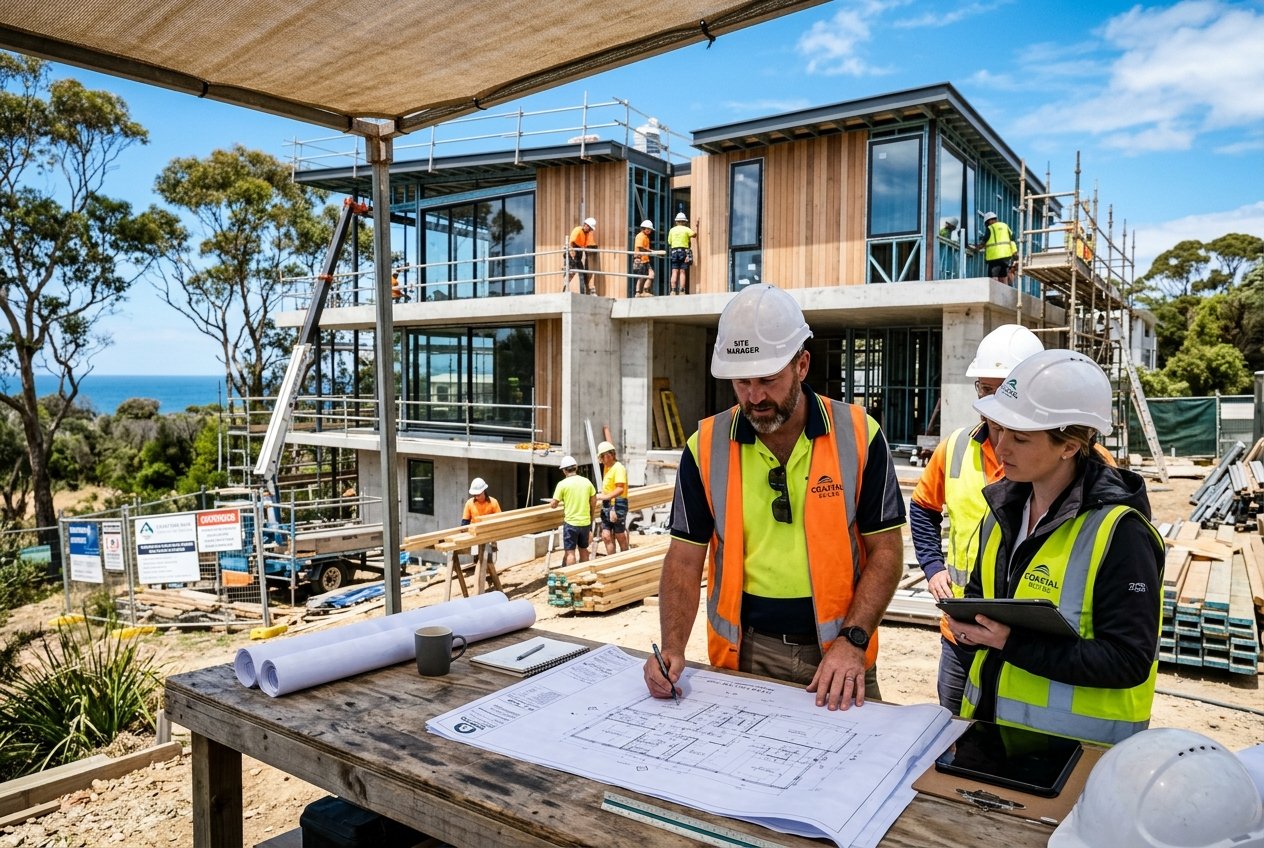
How Do Construction Loans Work?
Your finance progresses as your home does.
Before construction begins, your lender will assess your financial position, the proposed property and the construction project. Once your loan is approved and construction starts, funds are generally released to your builder in stages.
A typical construction project may involve:
The stages and payment requirements can vary depending on your builder, building contract and lender. Your broker can help you understand how your chosen lender structures construction finance before you proceed.
-
01. Land Purchase — If you're purchasing land to build your home, your finance may be structured to include the land purchase as part of your overall lending arrangement.
-
02. Foundations — Once site preparation and foundation work has been completed, the first construction progress payment may be requested.
-
03. Frame — A further payment may be released once the structural frame of the property has been completed.
-
04. Lock-Up — Once the property reaches the lock-up stage, another progress payment may be made.
-
05. Fixing — This stage generally involves internal work such as cabinetry, doors, fixtures and other fittings.
-
06. Completion — The final progress payment is generally made once construction is substantially complete and the lender's requirements have been satisfied.
What Are Construction Loan Progress Payments?
Paying for your build as work is completed.
Progress payments are staged payments made to your builder as different parts of your construction are completed. Instead of borrowing the entire construction amount at once, the lender generally releases the approved funds progressively. This can help align your finance with the construction schedule.
Before each payment, the lender may require confirmation that the relevant stage has been completed and may have specific documentation, valuation or inspection requirements.
Understanding this process before construction starts is important because delays in providing the required information can potentially affect the timing of payments to your builder. Your lender's specific progress payment requirements will depend on the construction contract and loan arrangement.
How Much Can You Borrow to Build a Home?
Start with what you can comfortably afford.
The amount you can borrow for your construction project depends on your individual financial circumstances and the lender's assessment criteria.
Your borrowing capacity may take into account:
It's important to understand your borrowing position before committing to land, a builder or a construction contract. At Brighton Finance, we'll assess your broader financial position and help you understand what may be achievable before you move ahead.
-
Your income
-
Living expenses
-
Existing home loans and other debts
-
Credit card limits
-
Number of dependants
-
Deposit and available savings
-
Land value
-
Construction costs
-
Proposed property value
-
Your employment or business structure
-
The lender's servicing and credit policies
How Much Deposit Do You Need?
There isn't one deposit amount that applies to every construction loan.
The deposit you need can depend on factors such as:
Your available deposit isn't the only consideration. You may also need to budget for costs such as:
Before committing to your project, we can help you understand the broader financial picture.
-
The value of the land
-
Total construction costs
-
The expected value of the completed property
-
Your income and financial position
-
The lender's lending criteria
-
Whether you're eligible for any relevant government schemes or concessions
-
Stamp duty
-
Conveyancing and legal costs
-
Building and design costs
-
Planning and permit fees
-
Site costs
-
Inspections
-
Lender fees
-
Insurance
-
Other professional and project costs
Construction Loans for a Knockdown Rebuild
Turn your existing property into your next home.
A knockdown rebuild can be an attractive alternative to selling your existing property and purchasing elsewhere. Instead of renovating an unsuitable home or moving to a new suburb, you may be able to demolish the existing property and construct a new home on the same block.
However, financing a knockdown rebuild can involve additional considerations. These may include:
If you're considering a knockdown rebuild in Perth, it's worth understanding the finance implications before committing to your plans.
-
Your existing mortgage
-
Current property value
-
Demolition costs
-
Construction costs
-
The value of the completed property
-
Temporary accommodation during construction
-
Existing financial commitments
-
Construction timeframes
Construction Loans for First Home Buyers
Building your first home is a big step. Your finance shouldn't be confusing.
If you're a first home buyer, building can give you the opportunity to create a home specifically for your needs. But combining a land purchase, construction contract, deposit and lending application can feel overwhelming.
We can help you understand:
We'll explain the process clearly and help you understand your options before you commit.
-
How much you may be able to borrow
-
How your land purchase may be financed
-
How construction progress payments work
-
What documentation you'll need
-
What costs you should allow for
-
How your construction finance may be structured
Construction Loans for Investors
Build with your investment strategy in mind.
Building an investment property can be an important part of a broader property strategy. Whether you're constructing your first investment property or adding to an existing portfolio, the finance structure needs to take your current position and future plans into account.
We can help you explore construction finance options while considering factors such as your existing lending, borrowing capacity, investment objectives and overall financial position.
Construction Loans for Self-Employed Borrowers
Finance that understands business owners.
If you're self-employed, your income may not always look as straightforward as a standard PAYG application. Business structures, company income, trust distributions, retained profits and varying income can all create additional considerations when applying for finance.
Brighton Finance understands the realities of running a business. We'll work with you to understand your financial position and explore lenders whose assessment criteria may be suitable for your circumstances.
What Do You Need for a Construction Loan?
Getting your documents ready can make the process smoother.
The exact requirements vary between lenders and applicants, but you may need documents such as:
Having the right information available early can help your broker and lender assess the application more efficiently. We'll let you know what is required based on your individual circumstances.
-
Identification
-
Evidence of income
-
Recent payslips or business financial information
-
Details of existing debts and financial commitments
-
Land contract, if applicable
-
Building contract
-
Building plans and specifications
-
Detailed construction costs
-
Information about your builder
-
Evidence of your available funds
-
Other documents requested by your lender
What Happens If Construction Costs Change?
Plan carefully. Stay informed.
Construction projects don't always go exactly according to plan. Changes to your building specifications, variations to your contract, unexpected site costs or increases in construction costs can affect the total amount required to complete your home.
This is why it's important to understand your available financial position before construction begins.
If your circumstances or project costs change during construction, speak with your broker as early as possible. Depending on the situation, additional finance may require further assessment and lender approval. Don't assume additional construction costs will automatically be covered by your existing loan.
Why Brighton Finance?
Finance advice built around your bigger picture.
At Brighton Finance, we don't believe in treating construction finance as simply another loan application. We start by understanding your plans, your financial position and what you're ultimately trying to achieve.
-
Personalised Advice — Your construction project is unique. We tailor our advice to your circumstances rather than applying a one-size-fits-all approach.
-
Access to Choice — We have access to an extensive panel of Australian lenders, giving us the ability to compare suitable lending options.
-
Clear Communication — We explain the finance process in straightforward language and keep you informed along the way.
-
Real-World Experience — Founder and Principal Mortgage Broker Chintan Shah brings experience not only in mortgage broking, but also as a homeowner and business owner.
-
Long-Term Support — Your relationship with Brighton Finance doesn't have to end at settlement. As your circumstances and financial goals change, we're here to help you review your options.